
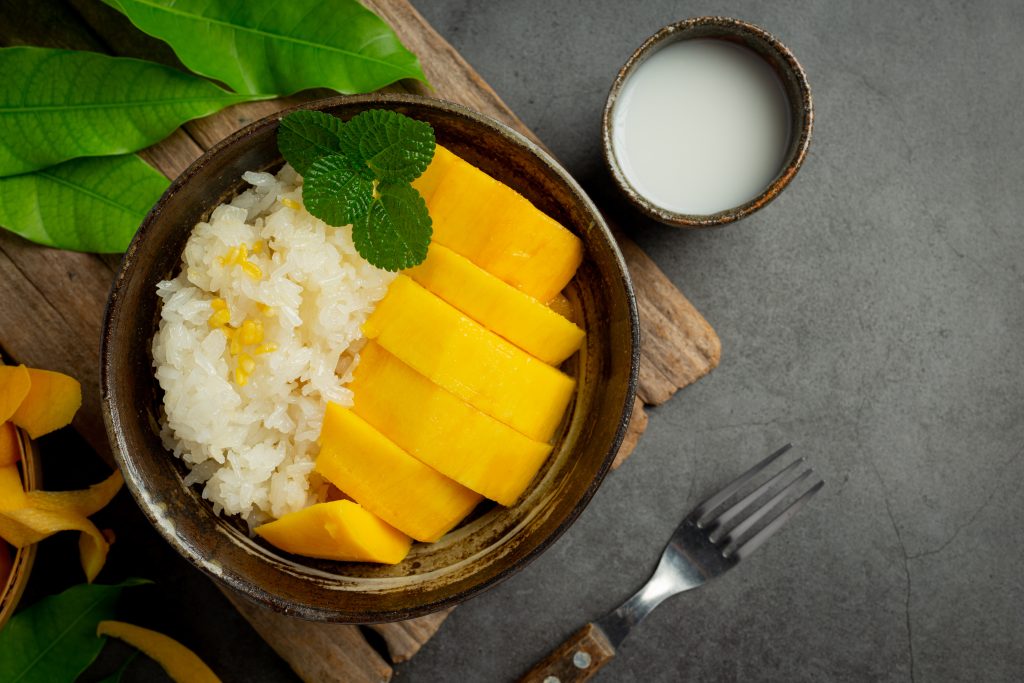
Thai mango sticky rice, known as Khao Niew Mamuang, is one of Thailand’s most popular desserts. It’s simple, comforting, and perfectly balanced with sweet coconut sticky rice, fresh ripe mango, and a lightly salted coconut sauce. What makes this dish stand out is the contrast of textures and flavors soft rice, juicy mango, and creamy topping all in one bite.
This recipe makes approximately 2–3 portions, making it ideal for a small batch dessert at home. The method focuses on getting the rice texture right and properly infusing it with coconut flavor, which is the key to making authentic Thai mango sticky rice.
Thai Mango Sticky Rice Ingredients
- 500 g sticky rice (3.5 cups)
- 500 ml water (3.5 cups)
- 3 pandan leaves
- 250 g sugar
- 1/2 tbsp salt
- 300 ml coconut milk
Coconut Topping Sauce
- 200 ml coconut milk
- 1/3 tsp salt
- 1 tsp cornstarch
For Serving
- Fresh ripe mango
- Crispy mung bean
Method
Prepare and cook the sticky rice
Start by rinsing the sticky rice under cold water until the water runs clear. This removes excess starch and helps prevent the rice from becoming overly sticky or mushy. Soak the rice in water for at least 4–6 hours or overnight. This soaking step is important because it ensures the rice cooks evenly and develops the correct soft texture.
After soaking, drain the rice and place it in a pot with 500 ml water and pandan leaves. Cook on medium heat until the rice is fully tender and the water is absorbed. You can also steam the rice if preferred, which is a more traditional Thai method. The goal is to have soft, slightly chewy grains that hold their shape.
Prepare the coconut mixture
In a separate saucepan, combine the coconut milk, sugar, and salt. Heat gently over low to medium heat, stirring until the sugar dissolves completely. Do not boil the mixture, as high heat can cause the coconut milk to split. The mixture should be smooth, slightly thick, and well balanced between sweet and salty.
Combine rice and coconut milk
Once the rice is cooked, transfer it to a large bowl and gradually pour the warm coconut mixture over it. Mix gently so all the rice absorbs the liquid evenly. Cover and let it sit for about 20–30 minutes. During this time, the rice will soak up the coconut milk and become rich, glossy, and flavorful.
This step is what transforms plain sticky rice into authentic mango sticky rice, so allow enough time for proper absorption.
Make the coconut topping sauce
In a small saucepan, combine coconut milk, salt, and cornstarch. Stir well to dissolve the cornstarch before heating. Cook over low heat, stirring continuously, until the sauce thickens slightly. It should have a smooth, pourable consistency.
This topping adds a creamy layer with a slight saltiness that balances the sweetness of the rice and mango.
Prepare the mango
Peel and slice the ripe mango into thin pieces. Use a sweet variety for best results, as the mango is a key part of the dish. The fruit should be soft, juicy, and naturally sweet.
Assemble and serve
Place a portion of the coconut sticky rice on a serving plate. Arrange the sliced mango beside it. Spoon the coconut topping sauce over the rice and finish with a sprinkle of crispy mung bean for added texture.
Serve immediately while the rice is still slightly warm. The combination of warm rice and cool mango creates a balanced and authentic dessert experience.
FAQs About Thai Mango Sticky Rice
What type of rice should I use?
Use glutinous rice (sticky rice) only. Regular rice will not give the correct texture.
Can I use canned coconut milk?
Yes, canned coconut milk works well and is commonly used for this recipe.
Why is my sticky rice too hard?
This usually happens if the rice was not soaked long enough or did not cook fully. Proper soaking is important.
Can I make this dessert ahead of time?
You can prepare the rice in advance, but it is best served fresh. Reheat gently before serving if needed.
What can I use instead of pandan leaves?
Pandan leaves add aroma, but if unavailable, you can skip them without affecting the core recipe.
If you tried this Thai mango sticky rice recipe, leave a comment below and share your experience or how you served it.