
If you’ve ever walked past a bakery early in the morning and smelled warm butter and chocolate in the air, chances are it was pain au chocolat calling your name. These classic French pastries look fancy, taste even fancier, but honestly? They’re not as scary to make at home as people think. Yes, they take time. Yes, butter is involved (a lot of it). But the payoff is huge.
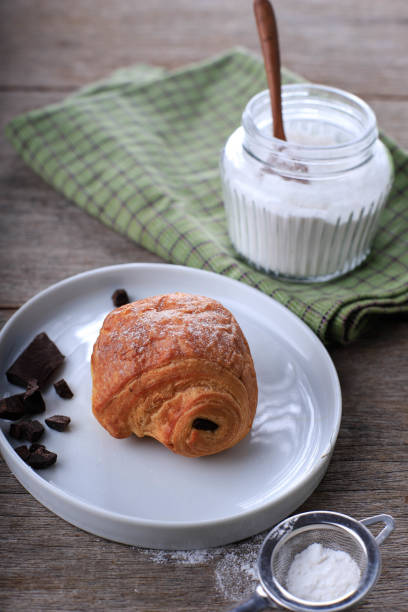
I’ve made pain au chocolat more times than I can count, messed them up a few times too, and learned that patience is the real secret ingredient here. So let’s slow down, enjoy the process, and make something that feels a little bit special.
What Is Pain au Chocolat, Really?
Pain au chocolat is a laminated pastry, meaning it’s made by folding butter into dough multiple times to create thin layers. When baked, those layers puff up and turn golden and flaky. Inside, you’ve got bars of dark chocolate that melt just enough without leaking everywhere (most of the time).
Unlike croissants, pain au chocolat are shaped into neat little rectangles. Same dough, different vibe. Think croissants are dramatic, pain au chocolat are calm and confident.
Ingredients You’ll Need
Dough
- 360g bread flour (2⅓ cups + 1 tbsp)
- 34g granulated sugar (3 tbsp)
- 8.5g salt (1.5 tsp)
- 8.5g instant yeast (3 tsp)
- 114g water (1/2 cup water)
- 114g milk (1/2 cup milk)
- 20g butter (2 tbsp)
For Butter Block
- 215g butter (about 2 sticks)
You’ll also need chocolate batons or good-quality dark chocolate cut into sticks. Don’t skip quality here, it actually matters.
Making the Dough (Take Your Time Here)
Start by mixing the bread flour, sugar, salt, and instant yeast in a large bowl. Give it a quick mix so everything is evenly spread out. Add the water and milk, then mix until a rough dough forms. It’ll look messy and that’s okay.
Once it comes together, add the 20g of butter. Knead until the dough becomes smooth and elastic, about 8–10 minutes by hand or 5–6 minutes in a mixer. The dough should feel soft but not sticky. If it sticks too much, resist the urge to dump in extra flour right away.
Shape the dough into a rectangle, wrap it, and refrigerate for at least 2 hours. Overnight is even better, honestly.
Preparing the Butter Block
This step is simple but important. Take the 215g butter and place it between two sheets of parchment paper. Use a rolling pin to pound and roll it into a flat rectangle, roughly the same width as your dough.
The butter should be cold but pliable. If it cracks, it’s too cold. If it melts, well… you went too far. Chill it again if needed. Butter mood matters here.
Laminating the Dough (Where Magic Happens)
Roll the chilled dough into a rectangle about twice as long as your butter block. Place the butter in the center and fold the dough over it like a letter, sealing the edges.
Now roll it out gently into a long rectangle and fold it into thirds. That’s your first turn. Wrap it and chill for 30 minutes.
Repeat this process two more times, chilling in between. Go slow. If the dough fights back, it needs rest. Forcing it will only end in butter leaking everywhere later (learned that the hard way).
Shaping the Pain au Chocolat
After the final fold and rest, roll the dough into a large rectangle about 4mm thick. Trim the edges to keep things neat, then cut into smaller rectangles.
Place one or two chocolate sticks near one edge of each rectangle and roll it up tightly. Seam side down, always. Line them up on a baking tray with space to grow.
Proofing and Baking
Cover the shaped pastries loosely and let them proof at room temperature until puffy. This can take 2–3 hours depending on your kitchen. They should look soft and slightly jiggly when nudged.
Brush with egg wash (one egg + splash of milk), then bake at 190°C (375°F) for about 18–22 minutes. Keep an eye on them. Every oven lies a little.
They’re done when deeply golden, flaky, and smelling like a bakery you can’t afford to live near.
Tips for Better Results
- Cold dough is your friend. Warm dough equals butter escape.
- Use bread flour, not all-purpose. Structure matters.
- Don’t rush the proofing. Underproofed pastries are dense and sad.
- If something goes wrong, bake them anyway. Ugly pain au chocolat still taste amazing.
Storing and Reheating
Pain au chocolat are best the same day, no debate there. But you can store them in an airtight container for a day or two. Reheat in the oven, not the microwave. Microwaves ruin the flakes, trust me.
You can also freeze them before baking. Just proof and bake straight from frozen, adding a few extra minutes.
Final Thoughts
Making pain au chocolat at home isn’t about perfection. It’s about learning how dough feels, how butter behaves, and enjoying the quiet moments between folds. The process is slow, yes, but that’s kind of the point.
And when you finally pull those golden pastries out of the oven, crack one open, and see the layers you made with your own hands… it hits different. Even if one leaks chocolate. Maybe especially then.
Refer and earn up to 50% commission—join now!
Thanks for stopping by and leaving a comment!
Join our affiliate program today and start earning up to 30% commission—sign up now!